

Telling Your Partner About Your Porn Addiction: The First Sentence
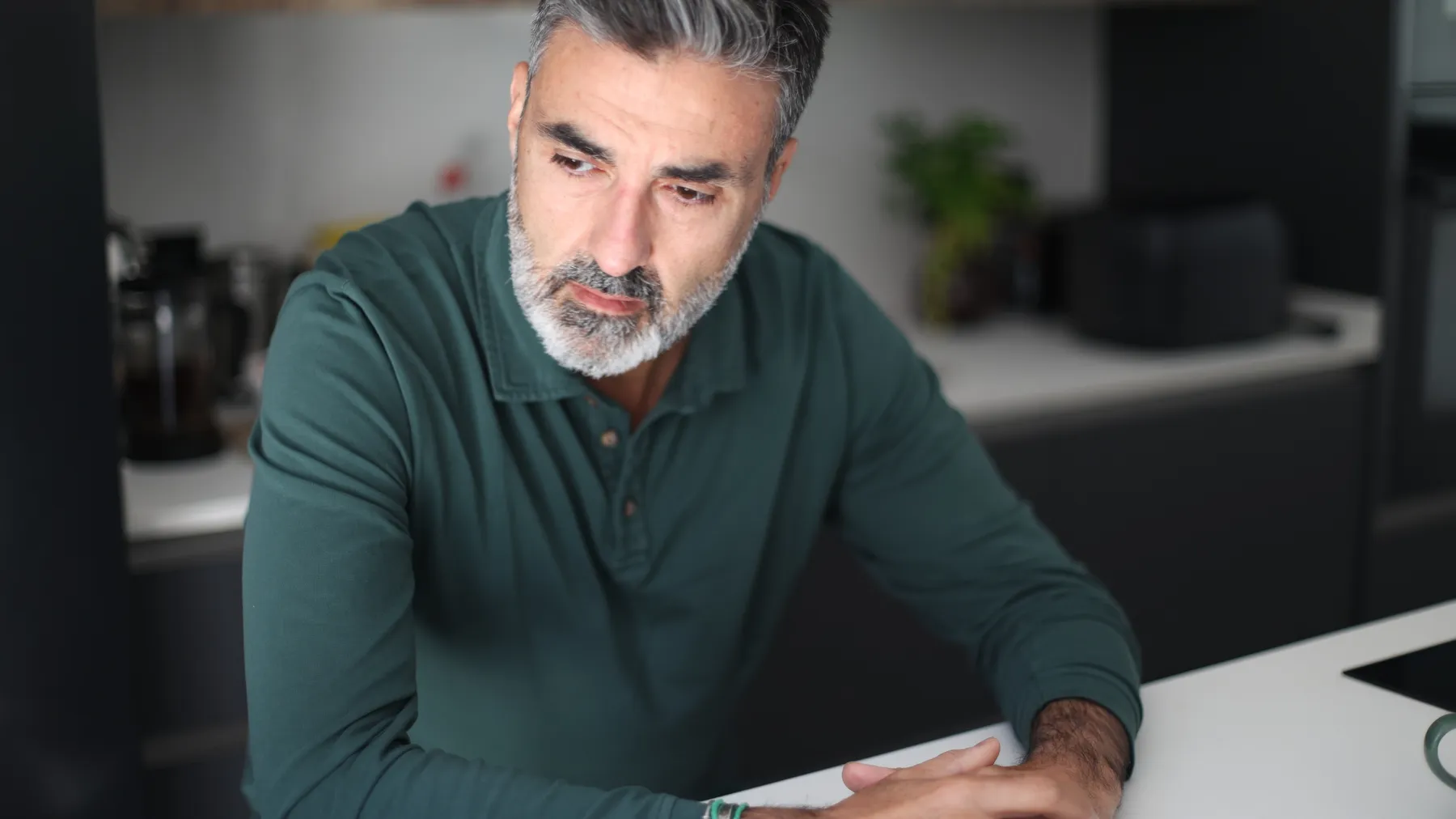
You have said the sentence in your head a hundred times. In the car, in the shower, lying awake beside them. Now you are standing in the kitchen, your phone face down on the counter, and your partner is asking what you wanted to talk about. If you are trying to work out how to tell your wife, husband, or partner about your porn addiction, here is where I would start: yes, tell them, and put the whole truth into the first sentence. Everything you say after that first sentence will be easier than it. The damage usually starts when you try to make it smaller.
This article is for the person who has decided to tell and has not done it yet. That is a less common position than you might think. Most of the people who reach our office come after the truth is already out, and more often through discovery than through a choice to speak. You still have the choice. What follows is how to use it well: why telling matters, what gets in the way in the first ten seconds, the five principles I want every person to carry into that conversation, and what comes next. The title says “wife” because that is how most people search for this, but everything here applies whether you are telling a wife, a husband, or a partner you are not married to.
Should You Tell Your Partner? The Secret Is Already in the Room
The short answer is yes. You deserve the reasons, though, not just the recommendation.
Porn use that is hidden inside a committed relationship does its damage in two layers: the use itself, and the deception wrapped around it. When researchers Spencer Zitzman and Mark Butler interviewed wives in couples therapy for exactly this problem, they described the harm as an attachment injury that unfolds in stages. First a fault line opens in the relationship. Then a rift widens as the partner feels distance they cannot explain. Finally comes estrangement, a settled sense of being emotionally unsafe with the person they chose. Your partner may not know the details, and they may already be feeling the fault line anyway.
The secret costs you too. A 2023 daily-diary study in The Journal of Sex Research followed 217 couples for five weeks. On days when a person’s solo porn use was unknown to their partner, that person reported lower relationship satisfaction and lower intimacy that same day. The hiding does not stay in the phone. It follows you into dinner, into bed, into every conversation where you are managing what they must not find out.
Telling is also far more survivable than it feels from where you are standing. Jennifer Schneider and her colleagues surveyed 164 recovering sex addicts and their partners about disclosure. At the time it happened, only about 58 percent of the people who disclosed felt it had been the right thing to do. Looking back later, 96.1 percent said it was right, and so did 93 percent of partners. Most of the people who dreaded it came to see it as the right call. Research on disclosing a relapse points the same way: when people told their partner themselves, rather than being found out, the relationship tended to fare better.
“But I Read That I Don’t Have to Tell Them”
You may have already come across the opposite advice. Some popular quit-porn self-help programs teach that disclosing to a partner is unnecessary, that your recovery is your own business, and that a partner who asks for honesty or sets boundaries is trying to control you. Parts of those programs help some people reduce cravings, and I would not tell you to throw out everything you learned there. On this point, though, I think they are wrong, and the harm lands on the person you love.
A distinction from shame-recovery work makes the difference clear. Privacy is information you have the power to share, and choosing not to share it is your right. A secret is information that has power over you. It governs what you do, what you say, and where you let your partner look. So ask yourself honestly: is this privacy I am choosing, or a secret that is choosing me? Most people reading this already know the answer.
Your partner’s boundaries after they learn the truth may feel restrictive, but they are not a plot to control you. They are how a person protects their own nervous system after finding out that the ground under them was not what they thought. Treating those boundaries as the problem turns the betrayed partner into the villain of your recovery. Schneider’s team made a similar argument decades ago about the AA Big Book’s advice not to disclose sexual history to a spouse. Their data did not support it, and I do not think the newer versions of that advice fare any better.
This is still your decision. I lean strongly toward disclosure, and I think the evidence supports that, but I cannot carry the consequences for you. There are rare situations, such as a terminal diagnosis or an acute crisis that would make it impossible to take in, where timing may warrant a delay. For most couples, the truth is the harder road and the better one.
The First Sentence, and Where the Trickle Starts

Picture the first sentence as a door. Everything you still have to say is on the other side of it, and the door is the heaviest part. People who have been through this describe the moment as the words catching in their throat, and the pull to swap the sentence they rehearsed for a smaller one: “I’ve been looking at some stuff I shouldn’t.” “I slipped a couple of times.” The smaller sentence feels merciful. It is where the trickle begins.
Trickle Truth Protects You, Not Them
Trickle truth is the pattern of revealing the truth in pieces over days, weeks, or months, usually in response to what your partner has already found or asked about. Schneider’s research calls it staggered disclosure, and it is common: 58.7 percent of the addicts and 69.7 percent of the partners in her survey reported more than one major disclosure.
From the inside, the trickle feels like protecting your partner from too much pain at once. One person in a recovery forum put it more honestly: trickle truth has nothing to do with the truth, and nothing to do with protecting the partner. What it protects is your image of yourself. Every withheld piece is a small bet that you can still be known as someone better than what you did.
There is a nervous-system reason this happens. Under the lying there is usually a belief running below awareness, something like “if I am truly known, I will be rejected.” When that belief is activated, the brain is choosing regulation over truth. Shrinking the sentence brings your panic down in the moment, which is exactly why it feels so necessary. It also means the price gets paid later, by your partner.
And the price is steep. If you were in one serious car accident, you would be shaken, and eventually you would drive again. If you were rear-ended every two weeks for six months, you would develop a deep fear of the road. That is what staggered disclosure does to a betrayed partner. Every new piece resets their trauma clock to zero and teaches them that “that’s everything” only means there is more to come. If you want to understand what that feels like from their side, our article on why trickle truth feels like a new betrayal walks through it.
Shame Shrinks the Sentence, Guilt Keeps It Whole
Two emotions are likely to show up in that kitchen, and they pull in opposite directions. June Tangney’s research on moral emotions found that proneness to shame was linked to self-focused personal distress, while proneness to guilt was linked to empathy for the other person. Shame asks, “What will this say about me?” Guilt asks, “What did this do to you?”
Shame is what edits the first sentence down. Guilt is what lets you keep it whole, because guilt keeps your attention on your partner instead of on your own collapse. You do not need to get rid of shame before you speak. You need to notice which of the two is holding the pen.
Write the First Sentence Down
The most practical help I can offer is this: write out everything you plan to say, in full, and do not skip anything. Writing it down means the sentence your nervous system will try to shrink in the moment has already been decided. Reading it from the page is perfectly fine.
A good first sentence carries the whole shape of the truth, even without the details. Something like: “I have been using porn for most of our marriage, I have lied to you about it, and I am getting help.” Adjust it so it is true for you, including how long, how often, whether it escalated, and anything that touched your finances or other people. Then a few things that help your body get through it:
- Ground yourself before you start. Feet on the floor, one slow breath, a moment to notice where you are.
- Pause to breathe when you need to. Stopping to breathe is not stalling, as long as you then keep going with the sentence you wrote.
- Ask your partner, gently, if they would be willing to hold their questions until you have finished. You are not controlling the conversation. You are making sure the whole truth arrives in one piece.
How to Tell Your Partner: Five Principles

1. Be Ready for What They Are About to Experience
Learning about a partner’s hidden sexual behavior is often experienced as trauma, not just bad news. A study of wives of sex addicts by Barbara Steffens and Robyn Rennie found that a majority responded to disclosure with significant trauma-related distress. Your partner may feel shock, rage, grief, or numbness, sometimes all within an hour. Let them.
Your job in that moment is to let the harm be exactly as large as it was. Two well-meaning moves make things worse. The first is what some couples therapists call the “I’m a worm” bypass: collapsing into self-condemnation (“I’m disgusting, I’ve ruined your life”) until your partner ends up comforting you. The second is the defensive minimize, which I cover under principle three. Both are attempts to reduce the pain in the room, and both make it about you.
2. Tell Everything at Once
This is the first sentence, applied to the whole conversation. Schneider’s research found that the initial disclosure does the most for long-term healing when it includes all the major elements of the behavior and leaves out the graphic details. One full telling, everything significant on the table, is structurally better than a series of partial ones, no matter how much gentler the partial version feels to you.
3. Accept Full Responsibility
Do not justify, deflect, or blame. Do not suggest it happened because your sex life was lacking, or because everyone does it. Watch closely for the defensive minimize: “It wasn’t as often as you’re thinking,” “I wasn’t really hiding it.” Your partner is working to see what was actually done to them, often for the first time. Correcting their picture tells them they cannot trust their own perception, which is a second betrayal layered on the first.
If a factual detail really is wrong, that conversation can wait for a calmer day. Validating their pain is not the same as confessing to things you did not do, and you do not need to invent anything to settle the moment. Validate the pain, over and over, until you actually feel it too.
4. Have a Plan for Both of You
In my experience, the disclosures that go best are the ones where the person telling arrives with a concrete next step already in motion. Maybe you have booked a first session with a counselor who specializes in porn addiction. Maybe you have installed accountability software on your devices, or identified a Certified Sex Addiction Therapist (CSAT) for yourself and a betrayal trauma specialist for your partner. A plan says something your words cannot: I am not only confessing, I am already moving.
5. Have Support on Standby
Arrange childcare if you have kids. Let a trusted friend or mentor know you are having a hard conversation, even without details. Have resources ready for your partner, too; our page on healing for the betrayed partner is written for them. One caution: do not bring one of your partner’s own friends into the secret before they know. That can land as a second betrayal.
When Is the Right Time?
There is no good time, but there are plenty of bad ones. People often disclose at the in-laws’ over the holidays, right before a church event, or on the way to a child’s birthday party. The motive in those moments is usually relief: you pick the moment when your own pressure is highest, not the moment that is safest for them.
Choose a time with room around it. Early in an evening, or the start of a weekend, with nothing on the calendar. Your partner will need time to ask questions, time alone, and a way to reach their own support. An hour before a family dinner is not that time.
At the same time, waiting makes it harder. The longer a deception runs, the more lies it takes to hold it up, and coming clean feels more dangerous with every one of them. The length of the hiding also becomes part of the wound. Sooner is better than later.
What Your Partner Needs to Know, and What They Don’t
This is where people most often over-share or under-share, and both cause harm. The distinction that guides our work is between information for agency and traumatic imagery.
Information for agency is anything your partner needs in order to understand the reality of their own life and make informed decisions about their future. That includes the scope of the problem (how long, how often, whether it escalated), whether money was involved, whether anyone else was involved, and how it was hidden. The concealment often hurts as much as the behavior, because it rewrote the version of reality they were living in.
Traumatic imagery is graphic detail: specific content, performer names, genres. Sharing it does not help your partner heal. It gives them pictures they may not be able to stop seeing, sometimes for years. In Schneider’s research, many partners who first demanded every detail later wished they had not asked. The goal is factual reconstruction, not graphic description. You want to blow the lid off the secrecy and the lies, not the content.
What we are describing here is the first telling. A formal therapeutic disclosure, prepared over several weeks with a specialized therapist and delivered with each partner supported by their own therapist, goes further and deeper. The first telling does not replace it. It makes it possible.
After the First Sentence

Before you speak, it may help to know what your partner has probably been living with. Even without the specifics, most partners sense that something is wrong: an emotional distance they cannot account for, a quiet feeling of not being enough, changes in your sex life that left them confused. You are not introducing pain into a pain-free relationship. You are naming what was already there so it can finally be addressed.
The first few days can be intense. Some couples need physical space during that time, and that is part of the process rather than a failure of it. Your partner may say they are leaving. Take that seriously as an expression of how much this hurts, and hold it alongside the data: in Schneider’s survey, 60.2 percent of partners threatened to leave after the initial disclosure, and 24.4 percent actually did, even temporarily.
What you do next matters more than how well you said it. One of the most damaging moves after a disclosure is disappearing into shame, going quiet and withdrawn just when your partner most needs you present. We wrote about that pattern in why the betrayer shuts down. The couples I have seen rebuild are the ones where the person who disclosed kept making visible changes without being asked: booking the therapy, handing over the passwords, telling a trusted friend, making the old behavior harder to reach. Half-measures tend to read as half-commitment, and your partner will notice.
Supporting the person who caused the betrayal is one of our team’s core specializations. Our page on help for the betrayer describes what that work looks like, from preparing a disclosure through the long work of rebuilding trust.
The Heaviest Part Comes First
Telling your partner will not fix what the secret broke. It is the only thing that lets the fixing start. The secret has already been shaping your relationship, your partner’s sense of safety, and your own sense of who you are. Speaking it ends that, and it hands your partner back the right to make decisions based on what is real.
When you stand in that kitchen, the pull to shrink the sentence will be strong, and it will feel like kindness. Write it down, breathe, and say the whole thing. The first sentence is the heaviest one you will carry. Everything after it is lighter.
Frequently Asked Questions
Should I tell my wife about my porn addiction?
Yes, in almost every case. Hidden porn use damages the relationship through both the behavior and the deception around it, even when your partner does not know the details. In Jennifer Schneider’s survey of recovering sex addicts and their partners, 96 percent of those who disclosed and 93 percent of partners later said disclosure was the right decision.
What if I start and can’t get the words out?
Write out what you plan to say in full beforehand and read it from the page if you need to. Ground yourself before you begin, pause to breathe when you need to, and ask your partner to hold their questions until you finish. The goal is that the whole truth arrives in the first telling, not that you say it perfectly.
Is it better to tell them a little now and the rest later?
No. Revealing the truth in pieces, often called trickle truth or staggered disclosure, tends to deepen the trauma, because each new piece resets your partner’s sense of safety to zero. It usually protects the discloser’s self-image more than the partner. Share all the major elements at once, without graphic detail.
Will my partner leave me if I tell them?
Most do not, though many say they will. In Schneider’s research, 60.2 percent of partners threatened to leave after the initial disclosure, but only 24.4 percent actually left, even temporarily. A threat to leave is usually an expression of how deeply the betrayal hurts, and it deserves to be taken seriously and met with visible change.
Do I have to tell my partner if I’ve already stopped?
Stopping ends the behavior, but it does not end the deception. Your partner is still living in a version of the relationship that is not true, and a secret you are keeping tends to keep shaping how present and honest you can be. The question to ask yourself is whether this is privacy you are choosing or a secret that has power over you.
If you have read this far, you are probably closer to that first sentence than you were an hour ago. You do not have to write it alone. Our team works with people preparing to tell a partner the truth, and with partners on the other side of that conversation, and a free consultation is where we can talk through where you are and what support would fit.
References
Corley, M. D., et al. (2013). Impact of disclosure of relapse for self-identified sexual addicts. Sexual Addiction & Compulsivity. doi:10.1080/10720162.2013.786659
Schneider, J. P., Corley, M. D., & Irons, R. R. (1998). Surviving disclosure of infidelity: Results of an international survey of 164 recovering sex addicts and partners. Sexual Addiction & Compulsivity. doi:10.1080/10720169808400162
Steffens, B. A., & Rennie, R. L. (2006). The traumatic nature of disclosure for wives of sexual addicts. Sexual Addiction & Compulsivity. doi:10.1080/10720160600870802
Tangney, J. P. (1991). Moral affect: The good, the bad, and the ugly. Journal of Personality and Social Psychology, 61(4), 598-607.
Vaillancourt-Morel, M.-P., et al. (2023). Partner knowledge of solitary pornography use: Daily and longitudinal associations with relationship quality. The Journal of Sex Research. doi:10.1080/00224499.2023.2219254
Zitzman, S. T., & Butler, M. H. (2009). Wives’ experience of husbands’ pornography use and concomitant deception as an attachment threat in the adult pair-bond relationship. Sexual Addiction & Compulsivity, 16, 210-240.
Podcast: Play in new window | Download
 January 2, 2019
You can become the person you want to be.
Our therapists work with people who have caused harm in their relationships and want to do the work to change. Real accountability starts here.
Take the first step toward repair